Sichuan Twice-Cooked Pork with Garlic Sprouts
★★★★½ Editors’ rating 4.7 · No reviews yet
Rate this recipe
Published October 27, 2026
9 ingredients
by WokBite Kitchen
15min Prep
45min Cook
60min Total
4Servings
MediumDifficulty
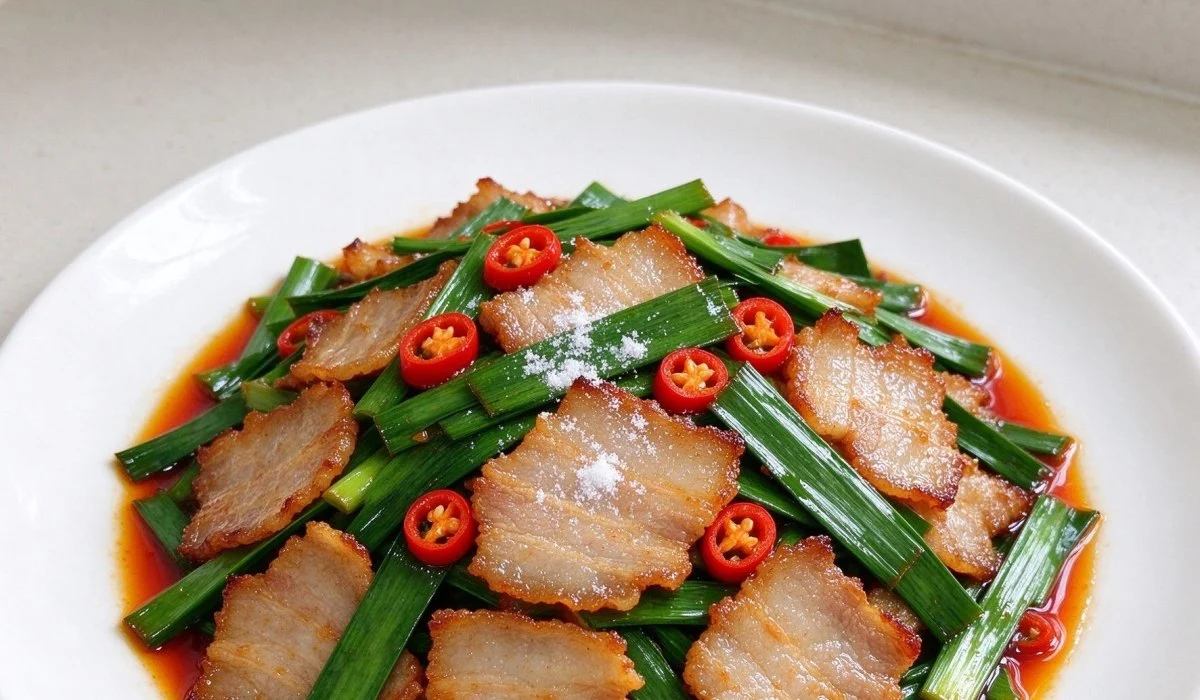
Twice-cooked pork is one of Sichuan’s most beloved home dishes, and the name tells you exactly how it works: the pork is simmered once, then stir-fried a second time. That first gentle poaching sets the meat so it slices cleanly and stays tender, while the second pass over high heat renders the fat and blisters the edges until they turn golden and faintly crisp.
The flavor comes from doubanjiang, the fermented broad bean paste that gives the dish its deep red color and savory funk. Frying it briefly in the hot oil cooks out its raw edge before the pork goes back in. Garlic sprouts go in last, stems first, so they keep their snap and sweetness against the rich meat.
Ingredients
Tap an item to tick it off- 1 piece skin-on pork belly (about 500 g)
- 1 tbsp (20 g) doubanjiang (fermented broad bean paste)
- 1 bunch garlic sprouts (about 200 g), cut on the diagonal
- 4 cloves garlic, smashed
- 1 fresh red chili, sliced
- 1 thumb ginger, sliced
- 1 pinch sugar
- 1 tbsp light soy sauce
- 2 tbsp (30 ml) Shaoxing wine, divided
Method
1
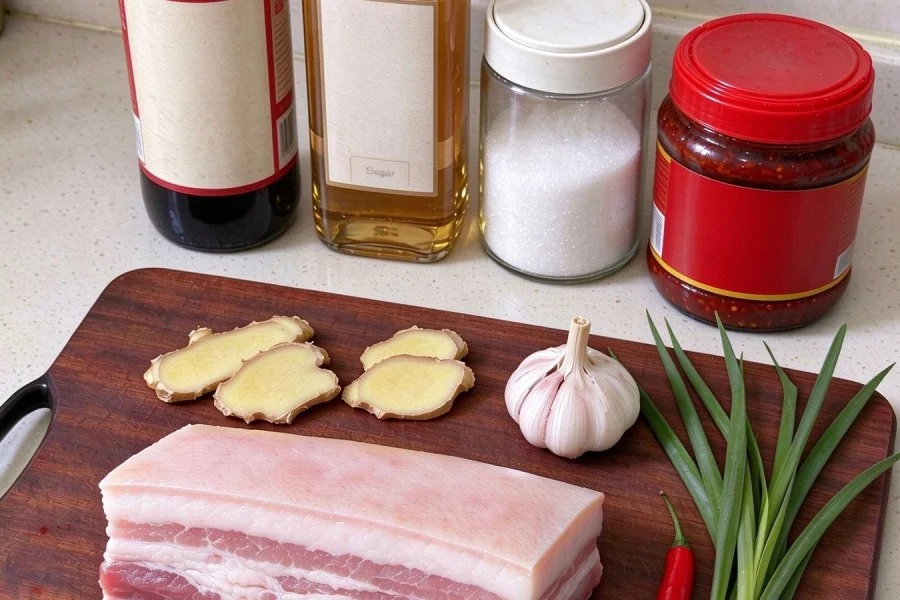
Set out all the ingredients.
2
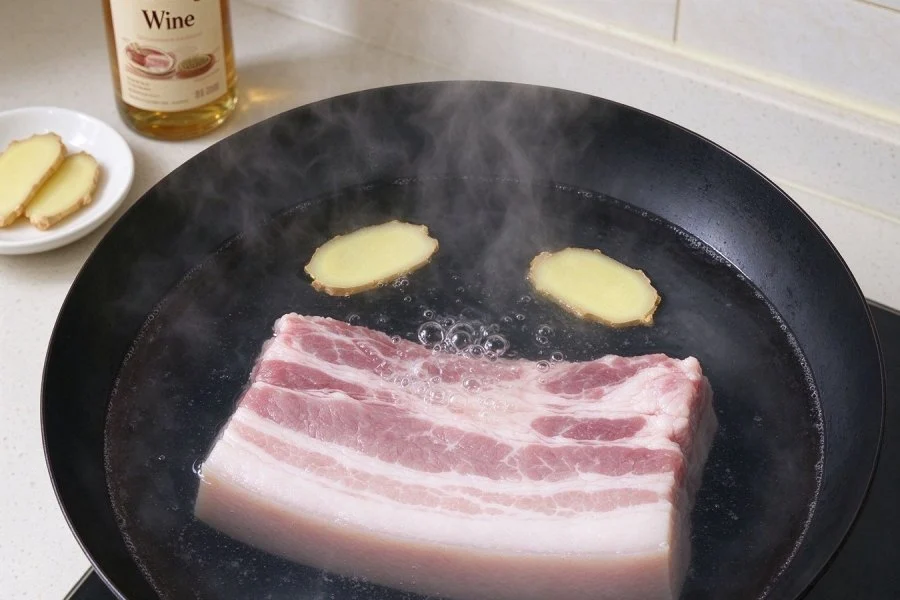
Put the pork belly in a pot with cold water to cover, 1 tbsp (15 ml) of the Shaoxing wine and 2 slices of ginger. Bring to a boil and simmer for 30–40 minutes, until the meat is about 80 percent cooked through. You can also cut the pork into pieces first to shorten the cooking time.
3
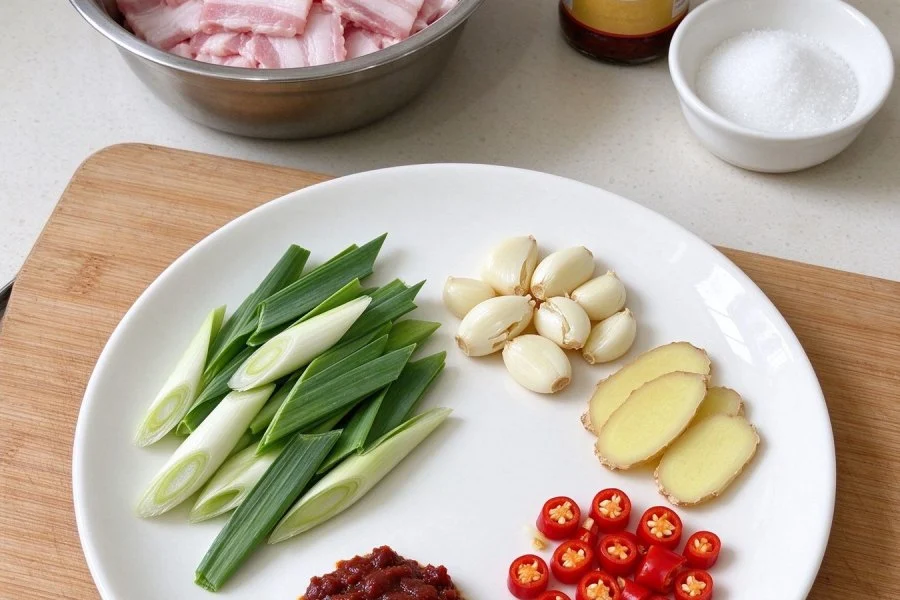
Prepare the aromatics: smash the garlic cloves but don't chop them finely. Cut the garlic sprout stems on a sharp diagonal so they absorb more flavor.
4
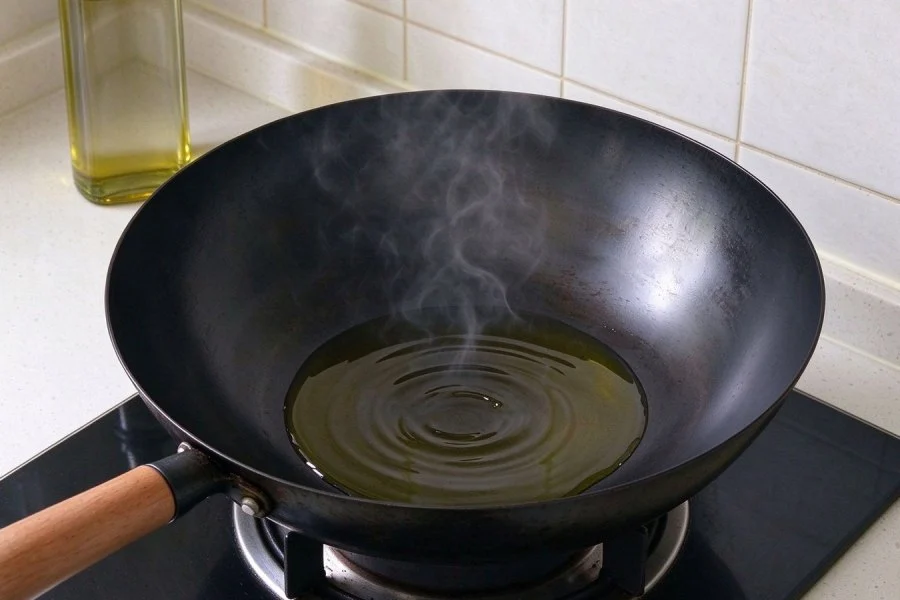
Heat a generous slick of oil in a wok until hot.
5
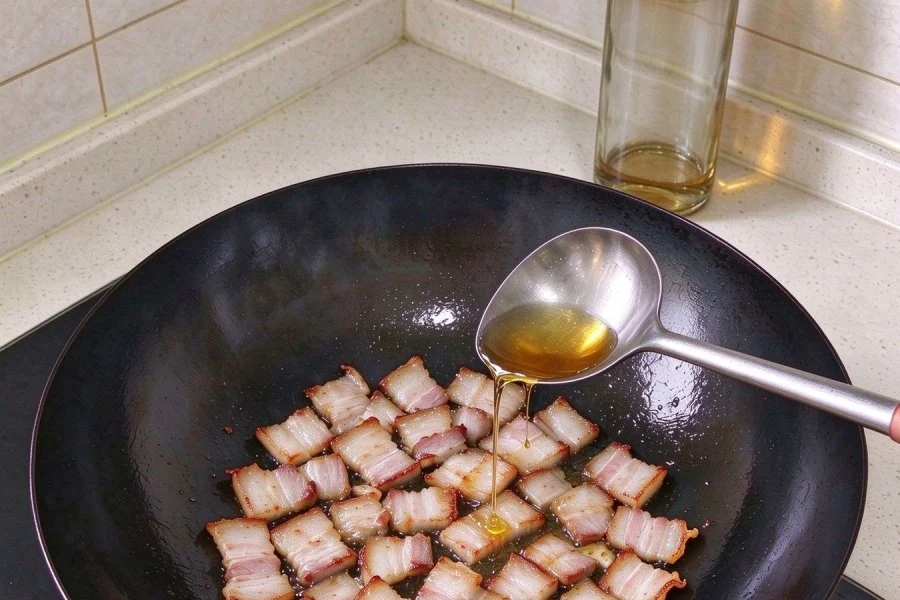
Add the pork belly and stir-fry until the edges are golden and slightly crisp. Pour the remaining 1 tbsp (15 ml) Shaoxing wine around the edge of the wok and let it sizzle off to remove any porky smell.
6
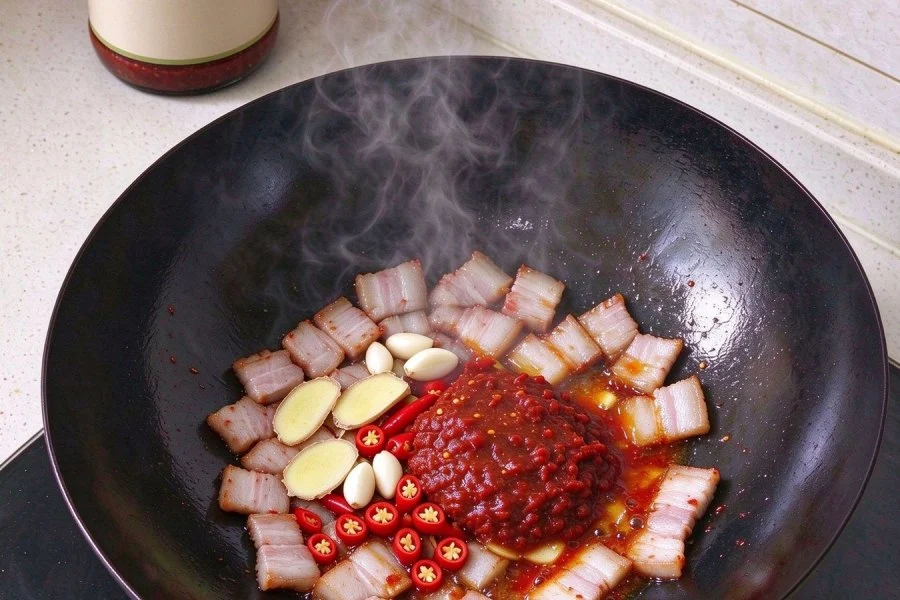
Add the ginger, garlic, red chili and doubanjiang first, and stir-fry until fragrant and the raw taste of the paste is cooked out.
7
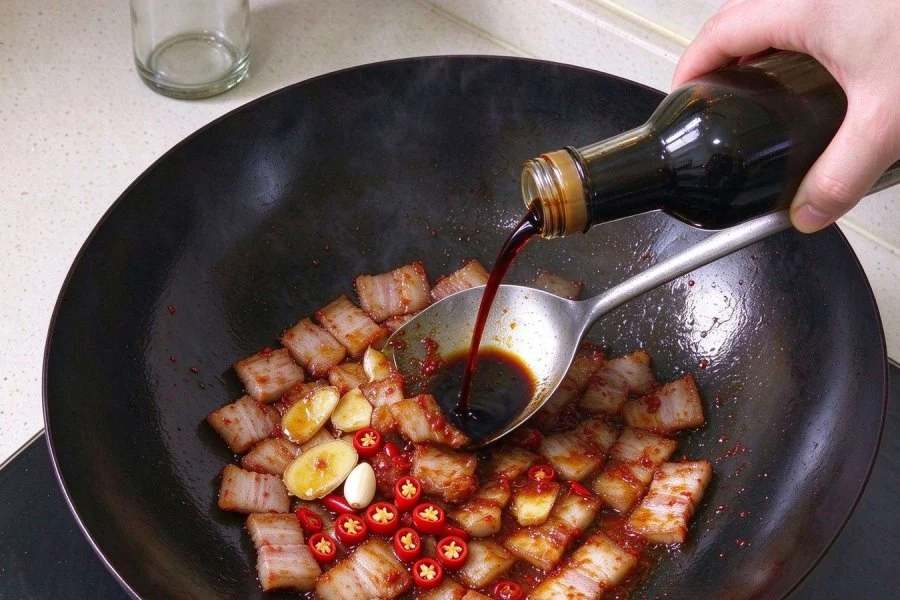
Add the light soy sauce and toss to coat evenly.
8
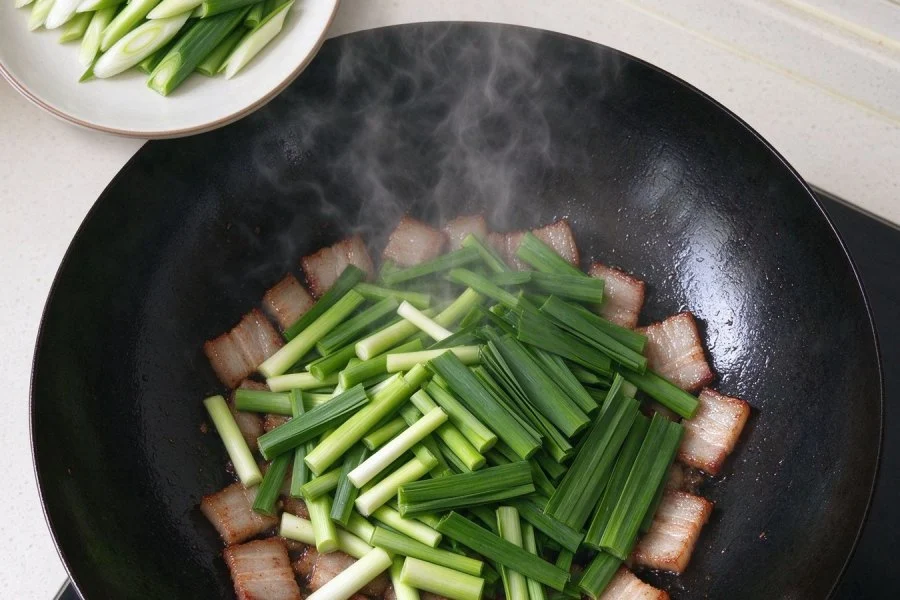
Add the garlic sprout stems, stir-fry, then add the leaves and toss until just wilted.
9
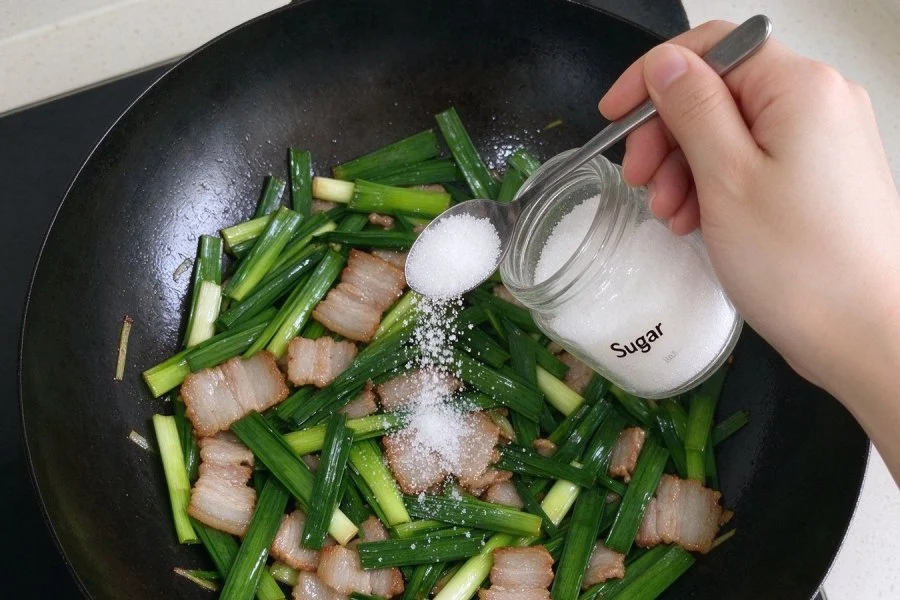
Just before serving, add a small pinch of sugar to lift the flavors.
Why this worksSimmering the pork first is what makes the slices clean and tender; skip it and the meat will seize and shred in the wok. The other key move is frying the doubanjiang in the hot oil until its raw, beany edge cooks off — do this before the pork goes back in, and keep the heat high so the garlic sprouts stay crisp.
Related Recipes
Reviews
No reviews yet — be the first to cook it and say how it went.